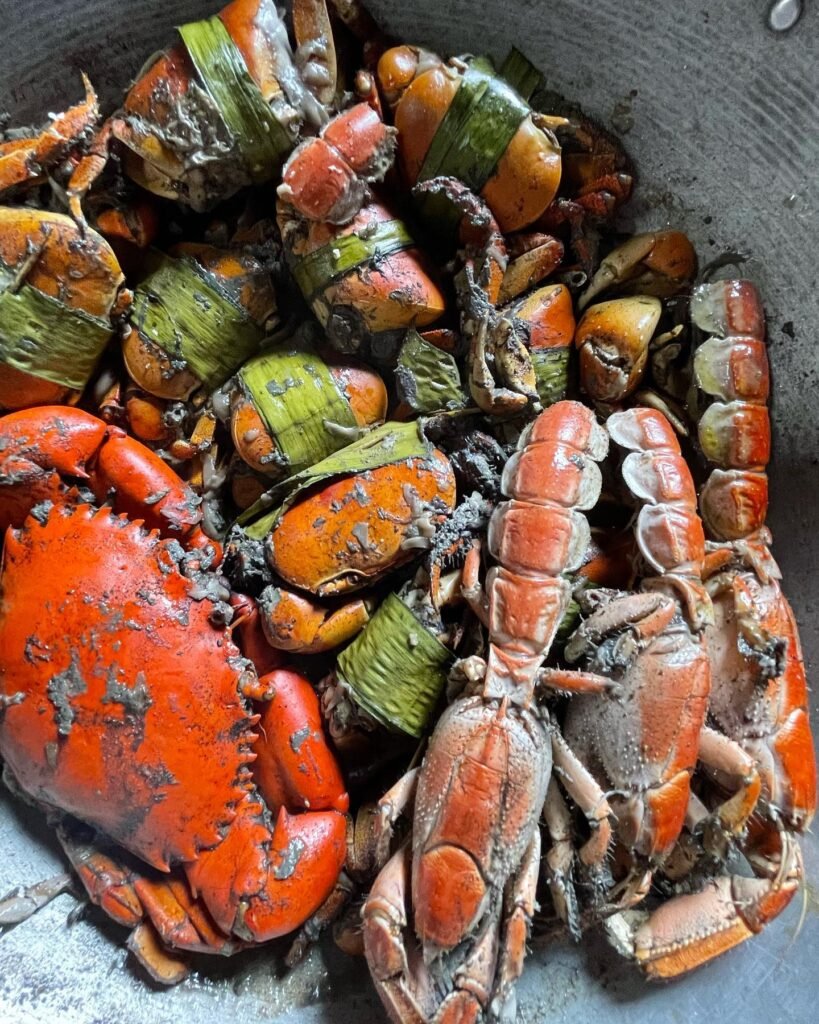
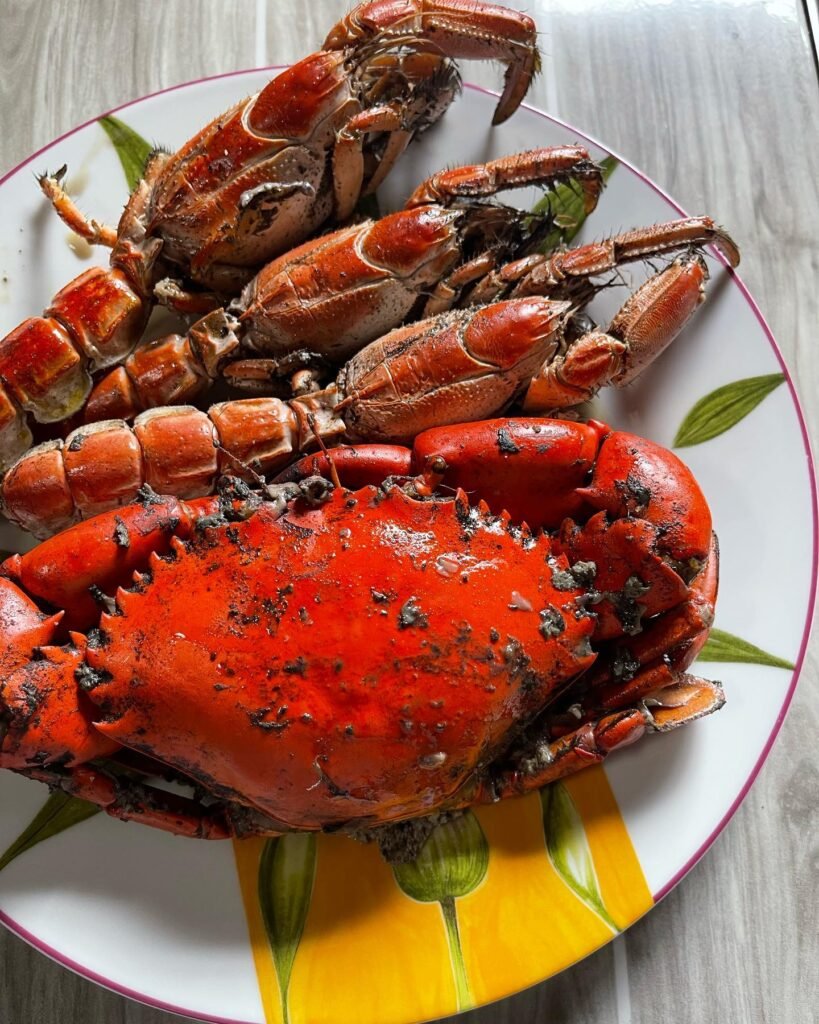
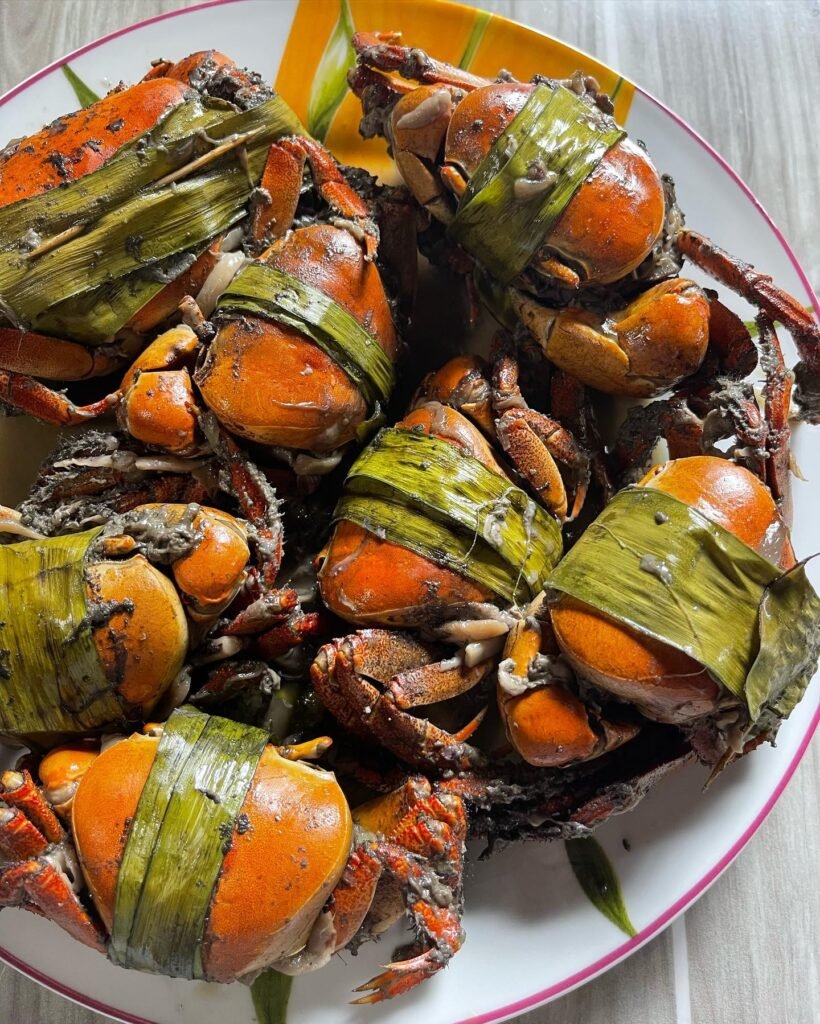
Ulang-ulang. A native to Marinduque is a local cuisine consisting of ‘kagang’ (crab) cooked in thick coconut milk with shredded coconut plus salt, garlic & onion.
Kamayan na!
After twenty years behind the stove here in Marinduque, I’ve realized that our best recipes aren’t found in culinary school textbooks—they are etched in the memories of our grandmothers.
Of all our local treasures, Ulang-Ulang is the one that truly tastes like the heart of the Philippines. It’s more than just a seafood dish; it’s a celebration of our island’s bounty, combining the sweetness of fresh river prawns with the creamy richness of our native coconuts. Whenever I serve this at the restaurant, I see the same look on people’s faces: a mix of comfort and pride.
What is Ulang-Ulang?
In our local dialect, ulang refers to the giant freshwater prawns or “crayfish” found in our rivers. This dish is a delicate, sour-savory soup that uses buko (young coconut) as its secret weapon. Unlike the heavy, spicy curries of our neighbors, Marinduque’s Ulang-Ulang is light, refreshing, and deeply aromatic.
The Ingredients of Tradition
To make an authentic Ulang-Ulang, we stick to what the land provides. You won’t find processed creams here—only the freshest harvest:
- Fresh Ulang: Large river prawns (you can substitute with tiger prawns if needed).
- Buko Meat and Water: The shredded meat of a young coconut and its refreshing juice.
- Kamias (Bilimbi): Our natural souring agent that provides a sharp, clean tang.
- Ginger and Lemongrass: For that unmistakable island aroma.
- Garlic and Onions: The foundation of any Filipino kitchen.
- Siling Haba: Long green peppers for a subtle, warm heat.
How to Cook Ulang-Ulang: The Marinduque Way
The beauty of this dish lies in its simplicity. We don’t want to overwork the ingredients; we want them to sing.
- Sauté the Aromatics: Start by sautéing ginger, garlic, and onions until the kitchen smells like home.
- Build the Broth: Pour in the fresh coconut water and add the smashed lemongrass. Let it simmer until the flavors meld.
- The Souring Stage: Add the sliced kamias. This is where the magic happens—the acid from the fruit balances the sweetness of the coconut water.
- The Star Ingredient: Gently drop in the prawns and the shredded coconut meat. Cook only until the prawns turn a vibrant orange.
- Final Touch: Season with a bit of sea salt and add the green peppers.
Why This Dish Matters
Eating Ulang-Ulang is an emotional experience for us Marinduqueños. It represents our resilience and our deep connection to our rivers and seas. It’s a dish that reminds us that we live in a land of plenty, where a few humble ingredients can create a world-class meal. It’s a taste of our identity that I am proud to share with every guest who walks through my doors.
When you cook this, you aren’t just making dinner; you’re keeping a Filipino legacy alive.